Stories
Stories That Help Teams See What Gets in Their Way
Software delivery is shaped by more than code. These serialized stories give teams a way to recognize familiar pressures, talk about them openly, and make progress together.
The Stories
Each series follows people navigating the decisions and pressures that shape software delivery.

La Startup
A Fintech Telenovela from Bogotá
FinPulso raised $15 million. Six months later, the codebase is chaos, the lead developer has vanished, and the CEO is hiding the truth from investors.

Signal Through Noise
Cutting Through Organizational Chaos — A Berlin Tech Drama
A growing Berlin gaming studio has 85 people and 147 priorities. As teams lose clarity, Navigator helps them see where work is getting stuck and make room for better decisions.

Código del Destino
Legacy Systems, Legacy Families
LogiMex built an empire on AS/400. Now they must modernize into SaaS or die — while a Brazilian consultant with a seductive framework circles like a vulture.

Three Weeks in Panama
Sophie Richter Visits Her Father's Finca
No consultants. No frameworks. Just a sixteen-year-old Berlin girl discovering her father's real life among horses, heat, and the people of Chepo.
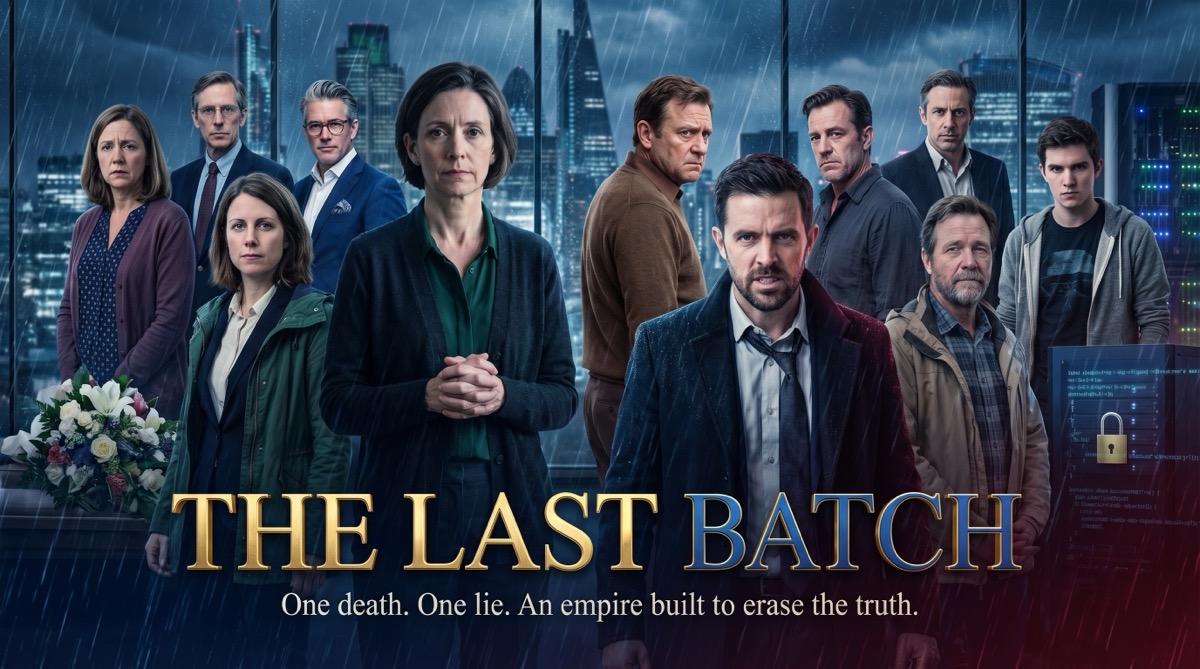
The Last Batch
When Competence Becomes an Existential Threat
An Ohio payroll company runs on COBOL batches, VB6 clients, and fear. Modernization finally works, then authority kills it.

Samba Dos Números
The Numbers Tell Everything, If You Know Where to Look
São Paulo 2020. Stefan Richter's first embedded engagement — a failing automotive software company, a corrupt CFO, and a Carnival party that changes everything.
See the System
Stories show the pressures people work within: budgets, deadlines, competing goals, and incomplete information. Seeing those pressures makes it easier to improve the system together.
Recognize Your Organization
A familiar meeting or difficult trade-off can be easier to discuss when it belongs to fictional characters first. That distance makes room for curiosity and useful conversation.
Learn What Works
Each story shows practical changes in context: continuous delivery, test-driven development, and decisions grounded in evidence. Readers see what those practices make possible for the people doing the work.
Why We Tell These Stories
A fictional scene gives people room to notice a pattern before discussing it in their own team. Readers can follow the pressures, choices, and consequences, then bring that perspective back to real work.
Advice can name a practice. A story shows what applying it feels like when deadlines, uncertainty, and relationships are involved. That makes the conversation more concrete.
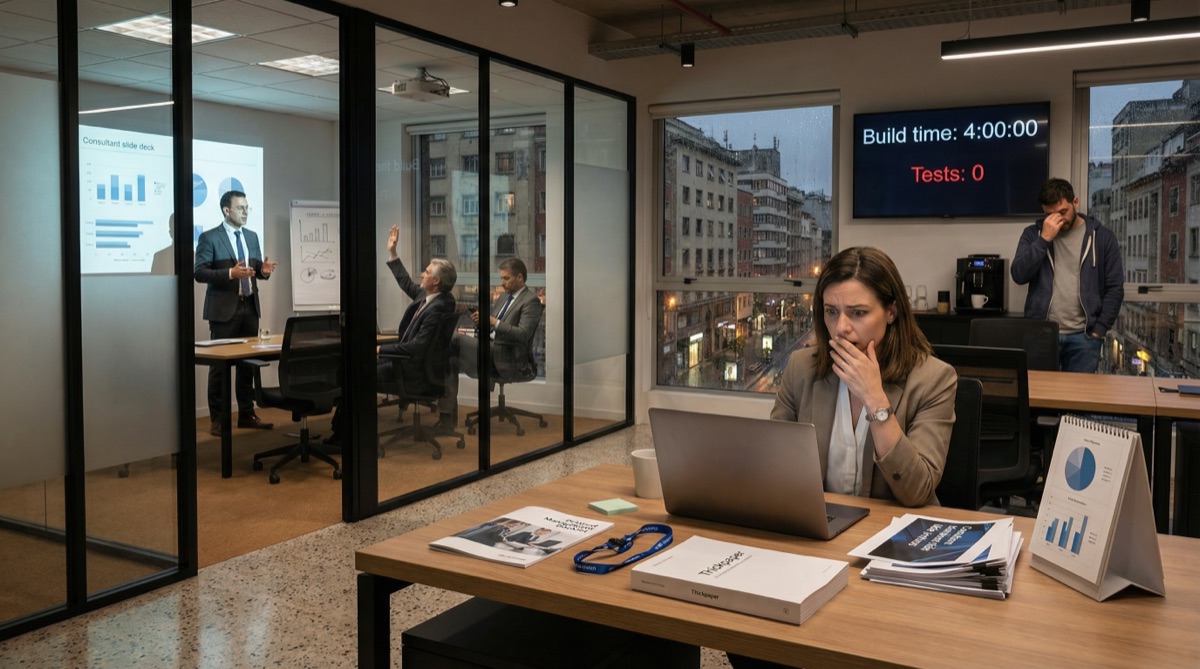
When Isabella discovers her CEO has been lying to investors, you see why trust matters when decisions are hidden. When Stefan arrives at a company where the build takes four hours and nobody runs tests, you see the cost of slow feedback and why improving it helps the whole team.
Names and settings change; experiences are combined; the drama is heightened. The decisions, technical challenges, and human consequences driving each series come from situations we have encountered in more than two decades of consulting across Europe, Asia, and the Americas. If a scene feels familiar, it can help your team name the pattern and discuss a better path.
One lesson runs through every story: People do better work when the system around them supports it. These stories help make that change visible.
About the Format
We write in the tradition of the Latin American telenovela: serialized drama with social questions at its heart. Each series has a planned arc, weekly episodes, and a definite ending. Following the characters over time lets readers see how choices add up and how a team can change direction.
Think of them as fictional case studies told from many perspectives at once: a CEO under pressure, a developer noticing what is slowing the work, a consultant advocating an approach, and a junior trying to ship working code.

If "telenovela" sounds unfamiliar, don't worry. You don't need to know the genre to recognize the patterns. Across Latin America, telenovelas have long served as a mirror for society: they name injustice, validate struggle, and show ordinary people that their problems are systemic, not personal. That cultural function is exactly what makes the format so effective for organizational storytelling. Learn why this format works →
When a Story Feels Familiar
There is room to improve the work. Through our Embedded Delivery Partner support, we work alongside CTOs and development teams in the real codebase and delivery flow to find and ease friction together.